
Spotlight on Faculty — Kim and Michael Fortun
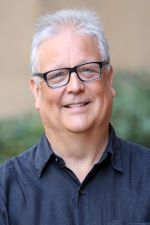
Kim Fortun and Mike Fortun are AirUCI’s newest faculty associates, having joined UCI’s Department of Anthropology in 2017 following a long stint at Rensselaer Polytechnic Institute in Troy, New York. They are anthropologists who have worked in the interdisciplinary field of Science and Technology Studies for more than 20 years.

If you’re wondering what anthropologists of science do, their recent book chapter “Anthropologies of the Sciences: Thinking Across Strata,” grounded in their NSF-funded research on air pollution and environmental health governance in cities in China, India, and the United States, is a good place for AirUCI people to start. Quoting from this document:
“Questions about sciences and scientists are a key focus: who is producing air pollution science; how it is commissioned, funded, and used; and what historical, political economic, and cultural influences shape what is known and done about pollution and health. We also want to understand the social formations and connections (between scientists in different countries, for example) that engender and empower improvements to air pollution science and governance. And we want to be able to characterize differences among the cities, drawing out what we think of as signature environmental health governance styles. It is a big, sometimes unwieldy, and experimental study, but also designed to mimic and enact the very kinds of research collaboration that we are studying.”
Their research on air pollution is one part of a broader research portfolio that includes studies of scientific collaboration across disciplines—scientific research infrastructure and data sharing, environmental health and justice, and environmental disasters fast and slow.
Kim’s initial field research was in Bhopal, India, in the aftermath of the world’s worst industrial disaster in 1984—a “fast disaster” in which technical and social systems cascaded rapidly out of control, resulting in immediate death and illness. Anthropologists understand air pollution as a “slow disaster” in which harms are emergent and cumulative over time but still difficult to characterize and respond to—posing social and cultural as well as scientific and technical challenges.
Mike began his career as a historian of science, but quickly pivoted from the history of genetics and genomics to anthropological study of contemporary genomic sciences and business. His new book, Promising Genomics (in progress), analyzes what genomic science became in the first wave of genome corporations, and focuses on the data cultures and practices through which genomic scientists draw findings from the massive amounts of data now available to them.
Kim and Mike began doing research together in the early 2000s as interest in “geneXenvironment interactions” accelerated. From early on, it was clear to them that this new, intensely interdisciplinary line of research would require new research infrastructure and forms of collaboration among scientists, and that pathways from science to policy and clinical care would be challenging. Their research—focusing primarily on asthma—examined how gene environment interaction research sparked new ways of thinking across scientific fields, and among environmental health advocates, policy makers, and patients.
About a decade ago, Mike and Kim began building an international collaborative project, the Asthma Files, designed to advance understanding of the cultural dimensions of environmental health. The Asthma Files research collaboration has developed in many directions, including many Ph.D. students and collaborators in China, India, Ecuador, and Taiwan. One current project focuses on air pollution governance in more than a dozen cities around the world.
To support the Asthma Files collaboration, Kim and Mike led development of digital research infrastructure to support data sharing, collaborative analysis, and visualization of results. The supporting, open source software—Platform for Experimental Collaborative Ethnography (PECE)—is now freely available and supports an array of research groups and projects.
Collaborative research remains rare in cultural anthropology, but Mike and Kim continue to see it as critically important for understanding how science is practiced and used in widely different settings. Kim was recently (2017-18) President of the Society for the Social Studies of Science, the professional organization of sociologists, philosophers, historians, rhetoricians, and anthropologists whose research focuses on the people and systems of science and technology.
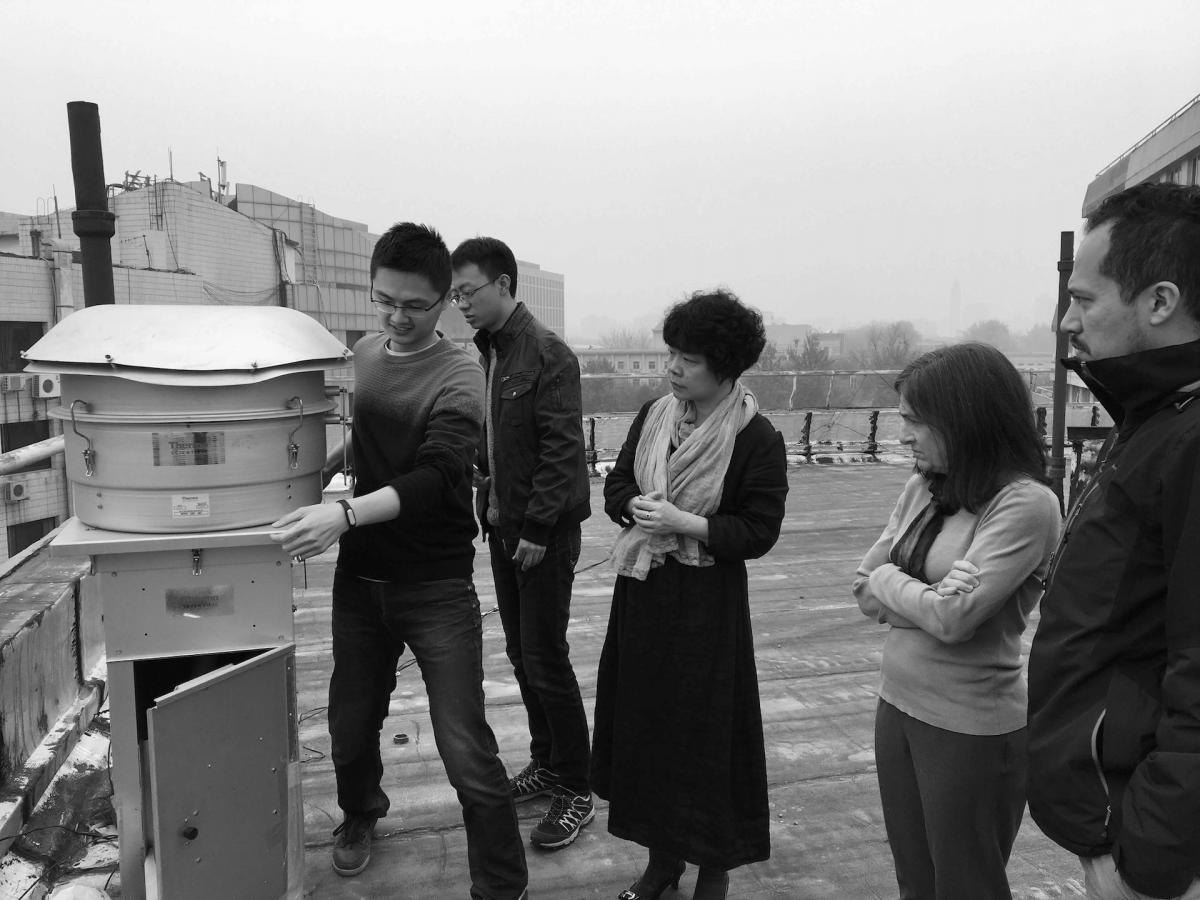
In the photo here, Peking University environmental health scientist Wei Huang and two of her lab members show Mike and Kim (2nd from right) and Rodolfo Hernandez (their research collaborator in Beijing, far right) inspecting the air monitoring equipment she installed on the roof of her building. Kim and Mike wanted to learn how air pollution science had developed in China and how it moved from lab to policy.
Although the development of PECE occupies a big part of their research time, the Fortuns remain active in their work on air pollution science and governance. Mike, Kim and their students have many ongoing projects:
- They continue to study air pollution governance in many cities around the world, examining pathways from science to politics and policy. Their in-development work can be seen here.
- In March 2021, Kim helped organize a five-session, international and interdisciplinary symposium commemorating the tenth anniversary of the Fukushima disaster, and she delivered the event’s introductory lecture.
- UCI Anthropology Ph.D. student Tim Schutz is studying the environmental impacts of Formosa Plastics, a Taiwanese company with (highly polluting) facilities in Taiwan, Vietnam, and the United States. He is in the process of building a Formosa Plastics Global Archive.
- UCI Anthropology Ph.D. student Prerna Srigyan co-authored a book with another Asthma Files Delhi researcher Rohit Negi, Atmosphere of Collaboration, focused on air pollution governance in Delhi that will be published this summer by Routledge.
- UCI Anthropology Ph.D. student Katie Cox is studying how California Assembly Bill 617 (which requires concerted, community-involved efforts to reduce pollution exposures in disadvantaged communities) is playing out on the ground. Katie’s research is in Santa Ana, where she works with the Madison Park Neighborhood Association and is learning from their efforts to characterize local traffic-related and point source air pollution.

This March 2021 photo shows Katie Cox and MPNA-GREEN community organizer Leonel Flores logging data at the group’s second Toxic Tour Day event. Local volunteers drove or walked around Santa Ana with handheld GPS devices as they recorded air quality measurements. And fellow AirUCI postdoc Shahir Masri (Jun Wu group) also participated, mapping out the monitoring sites for this community-based research.
Kim, Mike, and their students are excited to be part of AirUCI. They are eager to interact more frequently with AirUCI researchers, learn more about their projects, and explore potential new collaborations that help bridge atmospheric sciences and anthropology.
